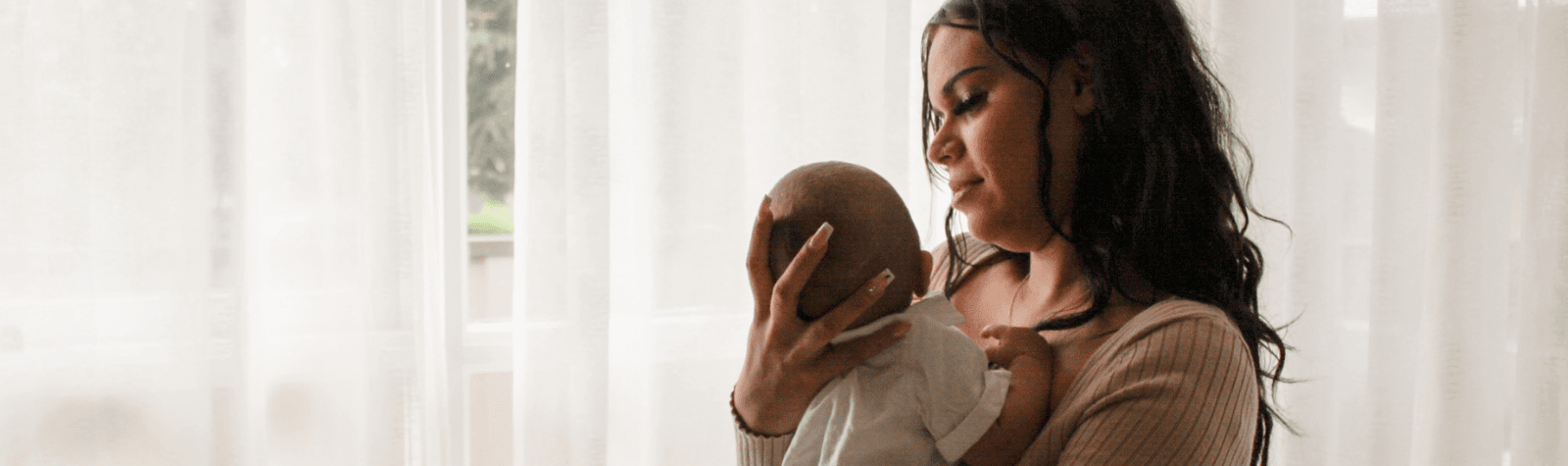
At 19, Lenah is a proud Gunaikurnai woman, a new mum, and one of eight siblings. Like many young people who come to Lighthouse, her childhood was shaped by instability, loss, and the lasting impacts of intergenerational trauma. When she found herself couch surfing and struggling to find a safe place to stay, she turned to Lighthouse for support. Today, she is raising her baby boy in a stable home, supported through Lighthouse’s On For Life program, alongside her sisters who have also rebuilt their lives with support.
But Lenah’s story is about more than one young person’s journey. Across Australia, Aboriginal and Torres Strait Islander young people are dramatically overrepresented in homelessness statistics, the result of generations of systemic disadvantage, and policies that continue to impact Indigenous communities today. For many young people, experiences of homelessness begin long before they ever find themselves without a home.
This tax time, we’re sharing stories like Lenah’s because they show what becomes possible when young people are given safety, stability, and ongoing support. Donations made before 30 June are tax-deductible and help Lighthouse continue providing the long-term care that breaks cycles of homelessness and trauma for Indigenous young people and families.
The Scale of the Problem – What the Data Shows
For young people like Lenah, homelessness is often the result of challenges that begin long before a housing crisis. While every story is unique, the data shows a clear and concerning pattern: Aboriginal and Torres Strait Islander young people are experiencing homelessness at disproportionately high rates across Australia.
According to the 2021 Census, 24,930 Aboriginal and Torres Strait Islander people were experiencing homelessness on Census night. That represents more than one in five people experiencing homelessness nationally (20.4%), despite Indigenous Australians making up only around 3.2% of the population.
Young people are particularly affected. More than one in four Aboriginal and Torres Strait Islander people experiencing homelessness (26.2%) were aged between 12 and 24 years old. These are young people who should be focused on education, relationships, employment, and building their futures, yet many are instead navigating housing insecurity and instability.
Importantly, homelessness does not always look the way many people imagine. Around 60% of Aboriginal and Torres Strait Islander people counted as homeless were living in severely crowded dwellings. While they may have a roof over their heads, overcrowding can mean a lack of privacy, safety, stability, and access to basic resources. It is a form of homelessness that often remains hidden from public view.
The true scale of the issue may be even greater than the statistics suggest. The Australian Bureau of Statistics notes that standard measures of homelessness do not always align with Aboriginal and Torres Strait Islander understandings of home, family, and connection to Country. As a result, many experiences of housing insecurity may go uncounted.
Behind every statistic is a young person, a family, and a community navigating challenges that are deeply connected to Australia’s history of colonisation, forced family separation, and ongoing systemic disadvantage.
The Care System Connection – How OOHC Fuels Later Homelessness
Across Australia, Aboriginal and Torres Strait Islander children are significantly more likely to be removed from their families and placed in out-of-home care (OOHC). At 30 June 2020, Indigenous children were entering and living in care at rates around 11 times higher than non-Indigenous children. Around one in five children entering care each year were under the age of one.
These figures matter because experiences in care can shape a young person’s housing stability for years to come.
While many carers and child protection workers provide important support – frequent placement changes, disrupted relationships, separation from family and community, and uncertainty about the future can have lasting impacts on a child’s sense of safety and belonging. When Aboriginal and Torres Strait Islander children enter care at such disproportionately high rates, they are also disproportionately exposed to the challenges that can increase the risk of homelessness later in life.
Research consistently shows that young people with a history of out-of-home care are at significantly higher risk of homelessness than their peers. Aboriginal and Torres Strait Islander young people leaving care often face multiple, overlapping challenges, including housing insecurity, limited family support, cultural disconnection, and barriers to accessing services.
The overrepresentation of Indigenous children in care is therefore not simply a child protection issue. It is one of the key structural drivers of youth homelessness in Australia. Without early intervention, stable care relationships, and long-term support beyond the care system, many young people face an uphill battle long before they reach adulthood.
Why Cultural Disconnection Matters
For Aboriginal and Torres Strait Islander young people, home can also mean connection to Country, community, family, culture, language, and identity. When those connections are disrupted, the experience of homelessness can become even more painful and isolating.
Research into Indigenous homelessness shows that Aboriginal and Torres Strait Islander experiences of home and homelessness can be distinct from non-Indigenous definitions. A young person may have a place to sleep, but still feel disconnected from the people, places, cultural practices, and relationships that help them feel safe, known, and grounded.
This is especially important for young people who have spent time in out-of-home care. Separation from family and community can also mean separation from culture, kinship networks, Elders, language, and Country. For some young people, this can affect their sense of belonging and identity at the very time they are trying to understand who they are and where they fit in the world.
Connection to culture is widely recognised as central to Aboriginal and Torres Strait Islander social and emotional wellbeing. In research with young First Nations people in Narrm/Melbourne, culture was described as a source of connection, strength, identity, and wellbeing, while disconnection from culture had a significant impact on how young people felt about themselves and their place in community.
This is why culturally safe support matters. Responding to youth homelessness means more than helping a young person find a roof over their head. It means recognising the relationships, histories, and cultural connections that help a young person feel safe enough to heal, grow, and thrive.
For young people like Lenah, stability is not only about having somewhere to live. It is also about being supported in ways that honour who they are, where they come from, and the connections that can help carry them forward.
How Lighthouse Foundation Supports Indigenous Young People
For more than 35 years, Lighthouse Foundation has provided vulnerable young people with something every child deserves: a safe place to belong.
Through our therapeutic model of care, Lighthouse supports young people who have experienced homelessness, family breakdown and intergenerational trauma. Rather than focusing only on immediate housing needs, Lighthouse provides stable homes, consistent caring relationships, and long-term support designed to help young people heal and build independent lives.
For Aboriginal and Torres Strait Islander young people, this approach is especially important. As we’ve explored throughout this article, experiences of homelessness are often intertwined with family separation, housing instability, and disconnection from community and culture. Addressing these challenges requires more than short-term crisis responses.
In FY24/25, 18% of young people in Lighthouse’s care identified as Aboriginal and/or Torres Strait Islander.
Lighthouse homes provide young people with safety and stability during some of the most difficult periods of their lives. Beyond housing, young people are supported to access education, employment opportunities and community connections. Through programs such as On For Life, support can continue well beyond a young person’s time in residential care, helping them navigate adulthood with trusted people still by their side.
This long-term commitment can make a profound difference. Young people like Lenah are not only finding stable housing; they are building futures for themselves and their children. Today, she is raising her baby boy in a safe home, supported as she steps into motherhood with confidence and hope.
Every young person deserves the opportunity to heal and thrive. With the right support, cycles of homelessness and trauma can be interrupted, creating enduring futures for young people, their families, and future generations.
You Can Help This Tax Time
Lenah’s story is one of resilience, but it is also a reminder that no young person should have to face homelessness alone.
Across Australia, Aboriginal and Torres Strait Islander young people continue to experience homelessness at disproportionately high rates. Many have experienced instability from an early age, including involvement with the child protection system, housing insecurity, and disconnection from family, community, and culture.
These challenges are complex, but they are not inevitable.
With the support of people like you, Lighthouse can continue providing safe homes, therapeutic care, and long-term support that helps young people build lasting stability.
This tax time, your donation can help ensure more young people have access to the safety, belonging, and support they need to create a different future.
A tax-deductible gift made before 30 June 2026 will help Lighthouse continue supporting vulnerable young people and young families when they need it most.
Donate today and help create a future where every young person has a safe place to call home.